
No products in the cart.
How Can an Underwater Scooter Enhance Your Diving Experience?
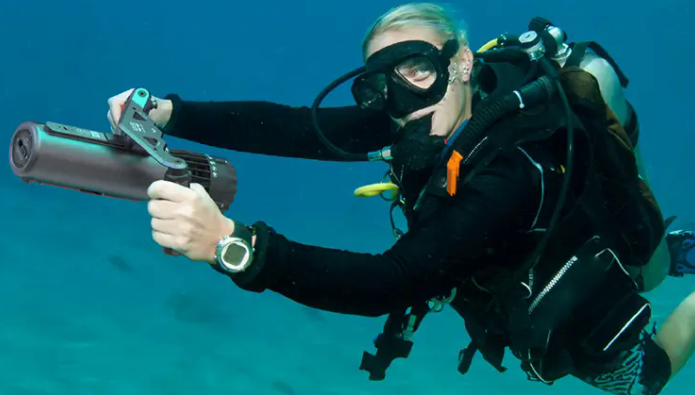
Modern divers use an underwater scooter to explore deep marine environments effortlessly worldwide today. Therefore, ocean enthusiasts choose personal propulsion units for demanding diving expeditions. Furthermore, certified manufacturing operations maintain strict lead-free compliance standards like RoHS seamlessly. Advanced jet-pump thruster systems generate rapid aquatic momentum across ocean currents. Consequently, divers extend dive times rapidly and effectively.
In addition, active propulsion technology eliminates physical kicking fatigue completely for underwater adventurers. Swimmers conserve precious breathing gas, avoid muscle cramps, and cover vast distances. Moreover, intelligent speed controls ensure smooth acceleration across ocean depths. Thus, marine explorers select compact battery thrusters for deep ocean exploration.
To begin with, harsh ocean currents place severe physical stress on human swimming endurance. Strong tides exhaust divers quickly during long coastal reef explorations. Meanwhile, manual kicking consumes cylinder breathing air at accelerated rates. Therefore, adopting intelligent active propulsion provides immediate physical relief and safety. In fact, underwater explorers preserve vital stamina on long ocean trips.
Furthermore, advanced thruster designs enhance diver maneuverability throughout complex underwater cave routes. Shielded propulsion mechanisms prevent accidental entanglements with floating ocean debris. Additionally, waterproof housing materials protect internal electronics during deep dives. Thus, ocean lovers explore marine environments safely. Overall, innovative scooter technology transforms diving performance completely.
High Air Consumption and Rapid Physical Fatigue
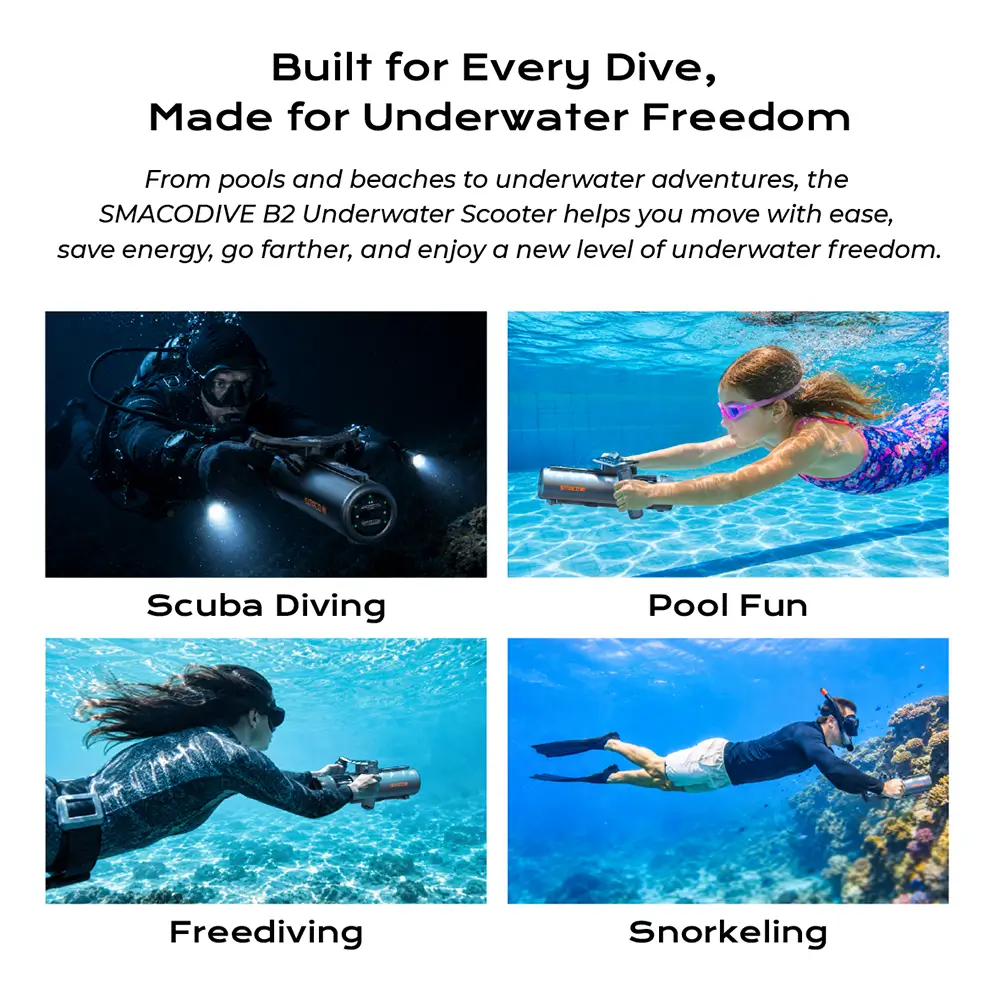
Strong ocean currents strip physical energy away from swimming divers very quickly. First, intense manual kicking causes rapid exhaustion during deep ocean dives. Second, high physical exertion increases lung air consumption rates dramatically. Furthermore, divers deplete breathing air tanks rapidly before reaching deep dive targets. As a result, underwater exploration sessions end prematurely.
In addition, severe muscle fatigue causes dangerous leg cramps in deep water. Distressed divers struggle to return to surface boats against strong coastal currents. Consequently, manual swimming limitations reduce overall diving safety during unexpected weather changes. Therefore, relying solely on swim fins limits underwater exploration severely.
Jet-Pump Propulsion with 9 kgf Thrust and 2 m/s Speed
Using a specialized underwater scooter eliminates physical kicking strain completely during ocean dives. Our HS-B2 underwater scooter deploys a high-performance jet-pump propulsion unit. The system delivers a maximum thrust of 9 kgf / 19.8 lbf smoothly. Therefore, divers achieve high-speed cruise performance up to 2 m/s easily.
Specifically, jet-pump technology provides safer operation than open propeller blades. The enclosed design prevents tangling with floating seaweed and loose fishing lines. Consequently, divers navigate complex marine environments without hazardous blade jam risks. Furthermore, stable motor power pushes through turbulent waters effortlessly. Thus, active propulsion preserves breathing air and extends dive times.
Moreover, the responsive Hall-effect switch-style speed control provides smooth acceleration control. Swimmers switch easily between Power Mode and Standard Mode during dives. Therefore, ocean explorers match propulsion output to specific current conditions seamlessly. Explore our complete Underwater Propulsion Category for advanced scooter models. Indeed, high-thrust jet propulsion guarantees superior diving freedom.
Heavy Equipment Weight and Complex Travel Restrictions
Traditional underwater propulsion units weigh over ten kilograms, creating severe travel transport hassles. First, bulky dive gear exceeds airline luggage weight limits on international flights. Second, heavy equipment strains shoulders during long walks along sandy beaches. Furthermore, massive propulsion units require dedicated storage cases that clutter small boats. As a result, traveling divers leave bulky scooters behind.
In addition, shipping oversized lithium batteries requires expensive hazardous material transport approvals. Travelers face constant airport customs delays due to strict battery safety regulations. Consequently, international ocean expeditions become logistically complicated and expensive. Therefore, heavy dive gear ruins light travel plans completely.
Ultra-Compact 3.0 kg Body with Flight-Approved 126 Wh Battery
Our underwater propulsion unit solves travel weight challenges by utilizing lightweight aerospace engineering. The compact main body measures approximately 325 × 85 × 95 mm. Weighing roughly 3.0 kg including battery and handle bracket, it fits into standard backpacks. Therefore, divers travel light anywhere without carrying heavy equipment cases.
In addition, the high-performance battery feature meets international civil aviation transport standards. The 126 Wh / 129.5 Wh rated battery capacity passes strict rail and air regulations. Consequently, travelers carry power packs onto commercial airplanes inside carry-on bags. Check our detailed Diving Gear Technical Guide for battery flight specifications. Indeed, compact construction enables effortless global travel.
Furthermore, the removable battery design supports fast swapping during long expedition days. The unit charges rapidly in 1.5 hours via 100W PD 3.0 USB-C ports. Moreover, dual 1/4″ threaded holes support camera mounts, fill lights, and wrist straps. As a result, active creators capture high-quality underwater video footage effortlessly.
Short Battery Runtime and Poor Device Versatility
Low-quality marine thrusters run out of electrical power after twenty minutes of underwater use. Users stop mid-dive when battery indicators drop unexpectedly to zero. Furthermore, single-purpose batteries remain useless after divers return to dry land. Consequently, travelers carry multiple separate power banks for cameras and smartphones.
In addition, slow battery charging times delay afternoon dive schedules significantly. Standard chargers require over six hours to recharge depleted propulsion batteries completely. Therefore, divers miss optimal tide windows and clear afternoon lighting conditions. Consequently, inefficient battery systems frustrate active underwater photographers.
56-Minute Long Endurance with USB-C Reverse Charging Output
Our diver propulsion vehicle delivers reliable 56-minute runtimes for long ocean dives. The 5000 mAh high-density power cell sustains continuous cruising across deep reefs. Furthermore, sensitive thermal protection circuits prevent internal battery overheating during fast charging cycles. Therefore, divers enjoy reliable battery power throughout extended underwater explorations.
In addition, versatile USB-C reverse output turns the scooter into a powerful portable bank. The battery charges mobile phones and action cameras directly on dive boats. Consequently, creators keep recording equipment fully powered during long marine expeditions. Indeed, multifunctional power features maximize gear utility on every trip.
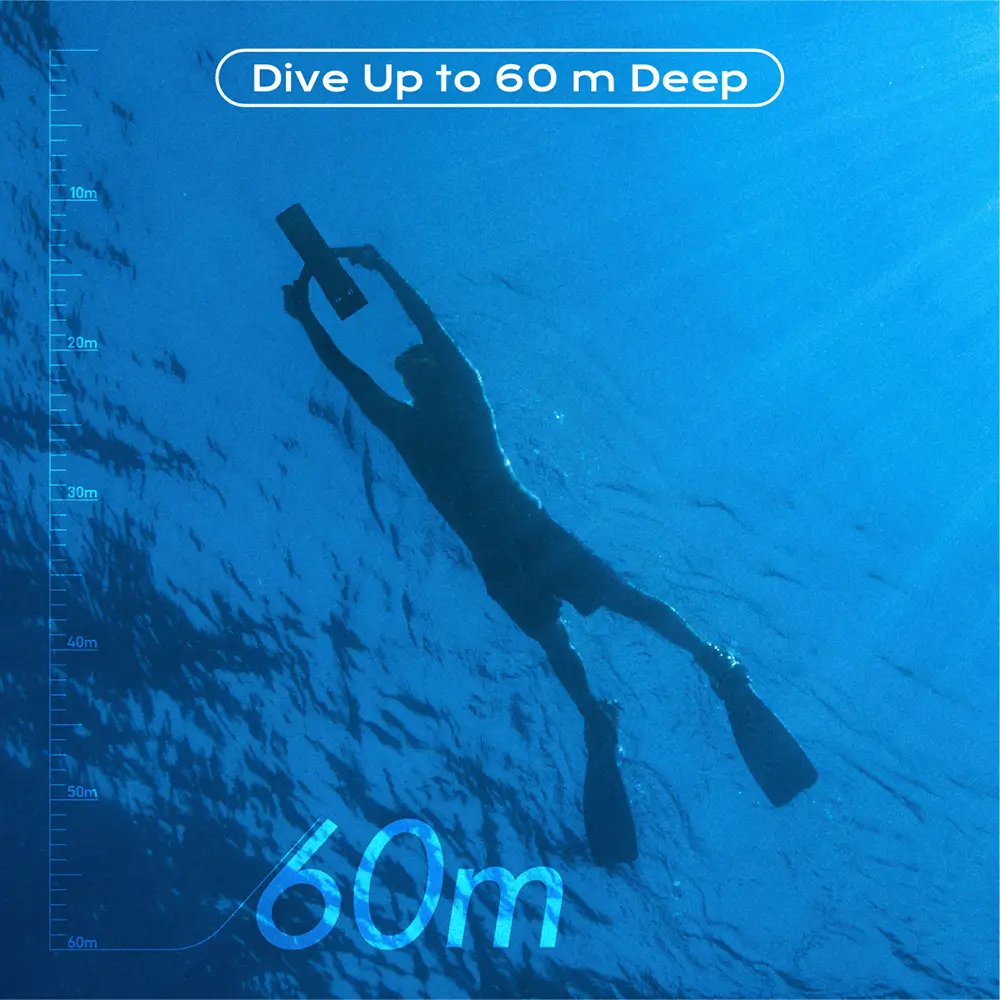
Furthermore, rugged waterproof housing withstands severe hydrostatic pressure down to 60 meters depth. Double O-ring seals prevent water ingress into internal motor chambers completely. Moreover, durable anti-corrosion surface treatments resist saltwater degradation across years of use. As a result, divers experience dependable deep water performance season after season.
Technical Performance Highlights for Underwater Scooters
Our professional underwater propulsion units support demanding marine diving requirements perfectly:
- Powerful Jet Propulsion: Delivers 9 kgf maximum thrust and top speeds up to 2 m/s.
- Safe Enclosed Design: Jet-pump housing prevents seaweed tangles and protects diver hands.
- Flight-Approved Power: 126 Wh battery meets civil aviation standards for easy air travel.
- Deep Waterproof Rating: Rugged waterproof construction operates safely down to 60 meters.
- Reverse USB-C Charging: 100W PD fast charging powers smartphones and action cameras anywhere.
Technical Specifications and Feature Comparison Table
The comparative table below outlines key technical specs and safety features:
| Parameter / Feature | Standard Propeller Scooter | HS-B2 Underwater Scooter |
| Propulsion Mechanism | Open Exposed Propeller | Enclosed Safety Jet-Pump System |
| Maximum Thrust Output | 5–6 kgf Static Thrust | Approx. 8.5–9.0 kgf Maximum Thrust |
| Top Cruise Speed | 1.2 m/s Basic Speed | Max Speed 1.8–2.0 m/s (2 Speed Modes) |
| Total Weight (With Battery) | 7.0–12.0 kg Heavy Frame | Approx. 3.0 kg Ultra-Light Body |
| Waterproof Depth Rating | 20–30 m Shallow Limit | 60 m Deep Waterproof Rating |
| Airline Transport Status | Restricted (Exceeds Limits) | 126 Wh Battery Flight-Approved |
| Fast Charging Standard | 4–6 Hours Slow Charger | 1.5 Hours Fast Charging (100W PD 3.0) |
| Reverse Power Feature | No External Output | Supports USB-C Reverse Charging |
Upgrade Your Diving Adventures Today
Choosing an advanced underwater scooter guarantees effortless propulsion, longer dive times, and superior travel convenience. Direct jet-pump thrust protects divers while cutting air consumption across deep ocean currents. Furthermore, flight-approved compact batteries and fast USB-C charging ensure seamless global dive trips.
Upgrade your ocean dive gear with professional underwater propulsion units today! Contact our technical sales team now for direct wholesale pricing and custom orders!


About author

Related posts
Choosing the right mini electric jet boat means balancing performance, handling, and riding enjoyment. The Havospark HS-V1 combines a 16-kilowatt electric motor with a 6.2-kilowatt-hour...

A jet-powered electric surfboard enables powered riding without relying on wind. Therefore, it suits riders seeking a motorized surfboard for recreational water sports. The HS-H5SE...
Deploying a precise electric propulsion motor transforms small watercraft navigation while delivering clean marine propulsion performance. Indeed, modern recreational boating demands efficient energy conversion to...

Choosing an electric hydrofoil surfboard requires balancing speed, endurance, and safety. Therefore, riders often face complex choices when evaluating key technical specifications. Selecting the correct...
A power board surfboard system completely transforms traditional ocean riding into a high-speed electric adventure. The PE02 HDPE Electric Mini Boat delivers powerful jet propulsion...
Add comment