
No products in the cart.
How Do You Choose the Right Personal Jet Boat?
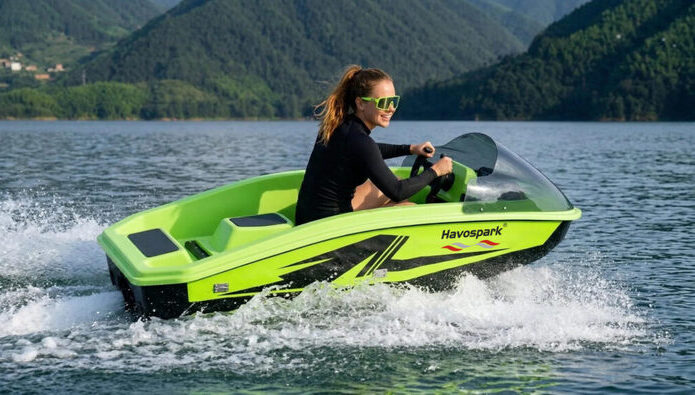
Choosing a personal jet boat starts with how you want to enjoy the water. Perhaps you prefer weekend rides across a quiet lake. Or maybe you want a compact electric watercraft for coastal recreation and resort activities. In each case, propulsion, battery capacity, hull materials, and handling all matter. For buyers, these factors also influence product positioning, maintenance planning, and long-term value.
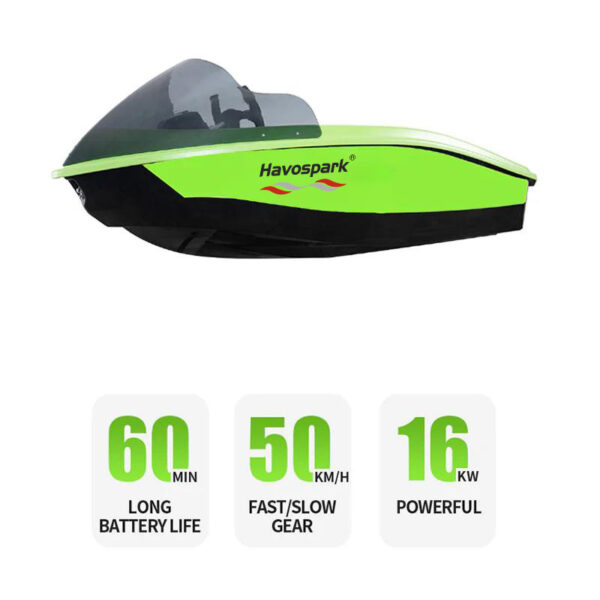
The Havospark HS-V1 ASA 16 kW mini jet boat combines electric propulsion with a lightweight engineering-plastic hull. Its specifications offer a useful starting point for comparing personal watercraft options.
What Kind of Water Experience Do You Want?
Match the boat to your favorite activities
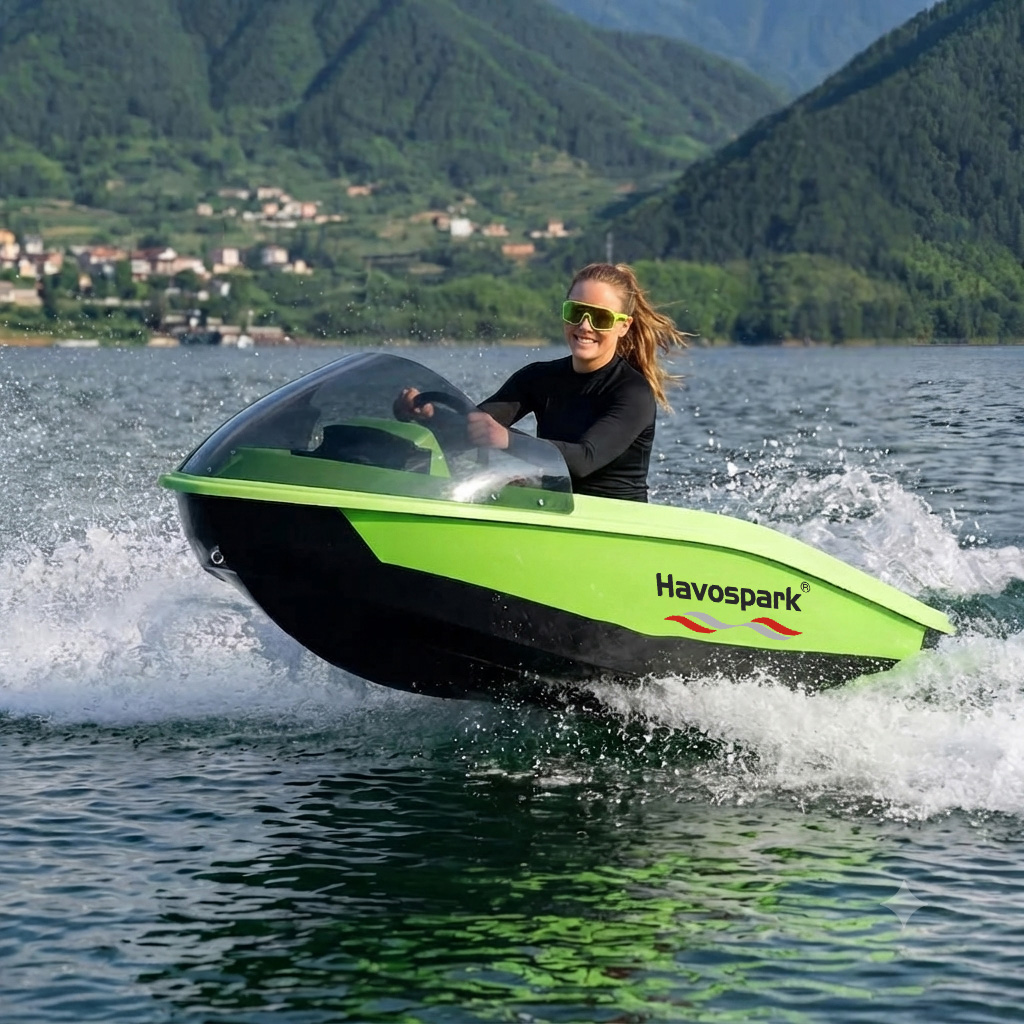
First, consider where and how you plan to ride. A calm lake offers different conditions from an exposed coastal area. Meanwhile, short recreational sessions may require a different battery strategy than frequent commercial rentals.
For example, a resort might offer guided rides during busy afternoon periods. Individual users may prefer exploring designated waterways during quieter hours. Therefore, the ideal personal jet boat should match the intended environment, session length, and operator experience.
The HS-V1 reaches a rated top speed of 50 km/h. Its 16 kW electric motor provides propulsion for recreational riding. However, actual speed depends on rider weight, water conditions, and operating conditions.
Before choosing a model, check local regulations and permitted riding areas. Also, confirm whether the intended location allows electric jet-powered craft.
How Much Power and Battery Capacity Do You Need?
Balance riding time with charging plans
Battery capacity influences how users schedule their time on the water. The HS-V1 uses a 6.2 kWh battery with a 72 V system. Its standard charging time is approximately 4.5 hours.
An optional fast-charging configuration lists a 40–60 minute charging time. Buyers should confirm the applicable charging conditions and compatibility before ordering.
Consider a water sports center operating several rental sessions each day. Staff need enough charging time between bookings. Therefore, fleet operators should evaluate battery capacity alongside daily usage and charging access.
A higher top speed may appeal to experienced recreational users. However, practical usability also depends on acceleration control, rider training, and safe operating practices.
Which Hull Material Matters for Long-Term Use?
Evaluate durability, weight, and transport
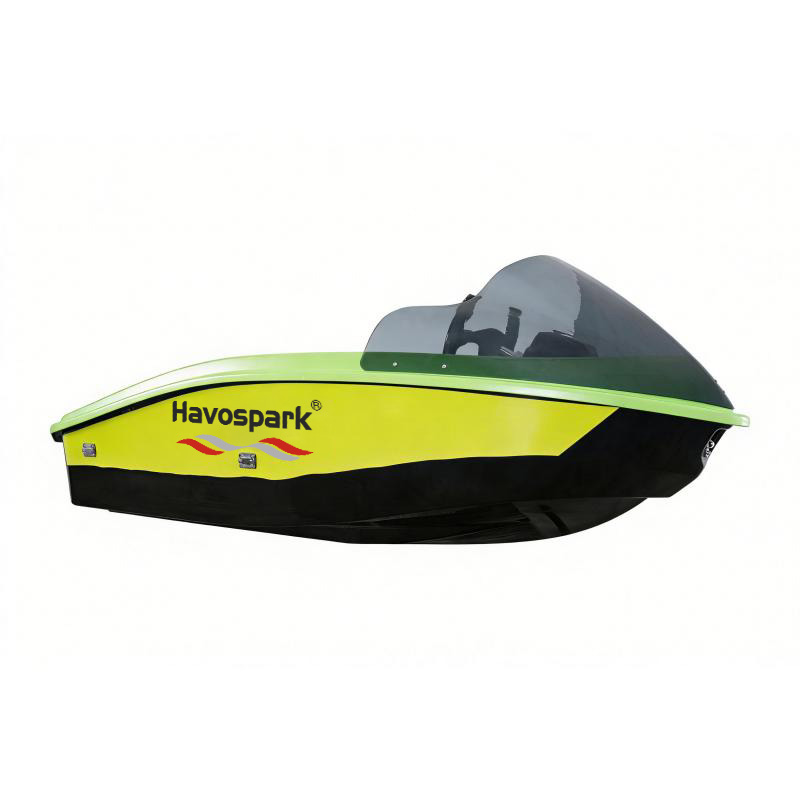
Hull construction affects handling, storage, and routine upkeep. The HS-V1 uses ASA engineering plastic. This material offers useful UV resistance and mechanical strength for outdoor applications.
Its hull weighs 67.5 kg, while the battery weighs 34.5 kg. The listed dimensions are 220 × 98 × 100 cm. Together, these figures help buyers assess transport arrangements and storage requirements.
For example, a water sports operator may need to move equipment between storage and a launch area. In that situation, total handling weight matters alongside hull durability. Buyers should also check lifting arrangements, transport equipment, and available storage space.
ASA construction can support outdoor use, but care still matters. Follow the manufacturer’s cleaning, inspection, and storage recommendations to maintain the hull over time.
How Do You Compare Personal Jet Boats for Value?
Look beyond the purchase price
For individual buyers, value means matching performance with intended use. For distributors and rental businesses, it also includes customer appeal, charging logistics, durability, and after-sales support.
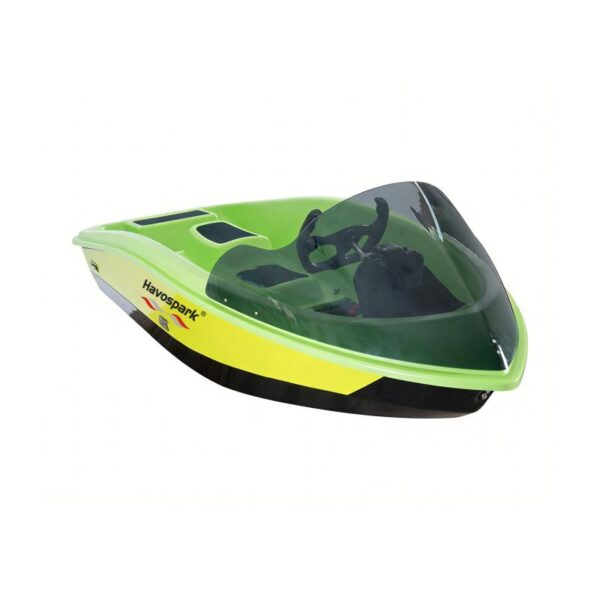
The following table summarizes the HS-V1’s key specifications. Use it to assess whether the model fits your target market.
| Feature | HS-V1 specification | Buying consideration |
|---|---|---|
| Propulsion | 16 kW electric motor | Suitable power category for recreational use |
| Battery capacity | 6.2 kWh | Helps plan charging and operating schedules |
| System voltage | 72 V | Confirm charging and service requirements |
| Maximum speed | 50 km/h | Depends on operating conditions |
| Hull material | ASA engineering plastic | UV resistance and mechanical strength |
| Hull weight | 67.5 kg | Relevant to handling and transport |
| Battery weight | 34.5 kg | Include in total transport planning |
| Maximum load | 150 kg | Account for rider and carried equipment |
| Standard charging | Approximately 4.5 h | Plan charging between sessions |
The maximum load is 150 kg, so buyers should include the rider and any carried equipment when checking suitability. They should also confirm safety equipment, operating limits, and local requirements before use.
For businesses evaluating multiple models, explore the Havospark product range. Compare each configuration against customer preferences, storage capacity, and the planned service model.
Is an Electric Personal Jet Boat Right for Your Business?
Connect product selection with customer demand
Electric propulsion can appeal to customers who want a modern water recreation experience. It may also suit resorts and rental operators seeking a differentiated activity offering.
However, commercial suitability depends on more than the boat itself. Operators should plan charging facilities, staff training, routine inspections, rider briefings, and local compliance. They should also assess expected daily usage before selecting fleet quantities.
For distributors, product consistency and supplier communication matter too. Ask about configuration options, spare parts, warranty coverage, and technical support. These details help establish a more predictable ownership experience.
Review the technical guide when planning your evaluation. Then discuss your target market and order requirements with Havospark to identify an appropriate configuration.
Questions Buyers Often Ask
Q1:Is the HS-V1 suitable for beginners?
Suitability depends on rider experience and local rules. Beginners should receive proper instruction and use suitable safety equipment. They should also start in permitted conditions with appropriate supervision.
Q2:How long can the HS-V1 run on one charge?
The supplied specifications do not state a fixed runtime. Actual operating time depends on rider weight, speed, water conditions, and usage patterns. Ask Havospark for estimates based on your intended application.
Q3:Can businesses purchase personal jet boats for rental operations?
Yes, businesses can evaluate models for recreational fleets. Before ordering, confirm commercial-use requirements, maintenance support, charging arrangements, and applicable local regulations.
Q4:How can I choose the right model for wholesale purchasing?
Start with your target customer, intended riding environment, and expected usage. Then compare specifications, customization options, service support, and total ownership costs. Contact Havospark to discuss wholesale requirements and explore suitable electric mini jet boat solutions.

About author

Related posts

A great day on the water is about more than reaching top speed. You may want to cruise along a scenic coastline, explore a quiet...
The Havospark jet boat appeals to water sports businesses seeking compact electric watercraft with practical performance and durable construction. For rental operators, resorts, and recreational...
Choosing a safe electric surfboard for beginners requires careful attention to stability, propulsion, battery design, and rider control. An electric hydrofoil surfboard combines powered movement...
For buyers researching mini jet boats havospark, the CA-5 offers a gasoline-powered personal watercraft. It combines a Suzuki four-stroke engine, two-person seating, and integrated safety...
For buyers evaluating wave power surfboards, the HS-JF04 combines lightweight construction with stable recreational handling. This electric surfboard targets leisure riders who want responsive speed...
Add comment